On May 8, 2026, the Ministry of Labour and Employment notified the Occupational Safety, Health and Working Conditions (Central) Rules, 2026 — and for thousands of Indian enterprises, BPOs, IT companies, GCCs, and BFSI organizations, employee transportation will never be the same.
The new OSH Rules 2026 make GPS-tracked, auditable, and documented employee transport a legal compliance requirement — not a best practice, not an optional upgrade.
If your organization employs women who work before 6 AM or after 7 PM, you now have a statutory obligation to ensure safe, verified, and fully documented transport operations.
This article breaks down exactly what the rules require, what compliance looks like in practice, and how a modern Employee Transport Management System helps your organization stay protected — operationally, legally, and reputationally.
What the OSH Rules 2026 Actually Require
The OSH Rules 2026 introduce specific obligations for employers around night shift women employee transport compliance. These are not recommendations — they are enforceable requirements under the Occupational Safety, Health and Working Conditions Code framework.
At the core, employers must ensure:
- Door-to-door, GPS-tracked transportation for all trips involving women employees during night shift hours
- Verified drivers with documented background checks and valid credentials
- Safe pickup and drop protocols with defined procedures for lone-rider situations
- Route monitoring with deviation alerts and incident logging
- Auditable trip records that can be produced on demand for regulatory review
- Written consent obtained from each woman employee before assigning her to night shift work
- Transport route and driver details shared with the employee and a designated emergency contact before every trip
Compliance means proof, not policy. Having a transport policy on paper is no longer sufficient. Regulators can ask for documented evidence — trip logs, GPS histories, driver records, route data — and organizations must be able to produce them. The burden of proof now sits with the employer.
Who Is Affected — and Why It Matters at Scale
The OSH Rules 2026 apply broadly, but the operational impact is most significant for organizations running large, shift-based workforces across India's metro cities.
| Sector | Night Shift Workforce Exposure |
|---|---|
| IT & Software Services | High — 24/7 delivery centers, offshore support |
| BPO / ITES | Very High — round-the-clock operations across cities |
| Global Capability Centers (GCCs) | High — multi-location, multi-shift operations |
| BFSI | Moderate to High — trading desks, banking operations |
| Manufacturing & Pharma | Moderate — shift-based production lines |
| Healthcare | High — nursing and support staff on overnight shifts |
If your organization operates across Bengaluru, Hyderabad, Pune, Chennai, Mumbai, or the NCR corridor — where large night-shift workforces are common — the compliance stakes are particularly high.
The Problem With How Most Companies Manage Transport Today
Most organizations running employee transport at scale are still working with fragmented systems:
- Vehicle GPS managed by the fleet vendor
- Driver documents stored in HR files or spreadsheets
- Trip records compiled manually from cab coordinator emails
- Incident reports handled through WhatsApp threads
- No centralized audit trail
This approach may have been operationally adequate before. Under the OSH Rules 2026, it creates serious legal and reputational exposure.
Consider this: if an incident occurs involving a woman employee during a night shift transport, can your organization answer these questions within 24 hours?
- Was the vehicle GPS-tracked throughout the journey?
- Did the driver have a verified background check on file?
- Did the vehicle follow the approved route?
- Was any route deviation logged and flagged?
- Are complete trip records retrievable for that specific employee on that specific date?
If the honest answer to any of these is "we'd have to check with the vendor," your organization has a compliance gap.
OSH Rules 2026 Requirements vs. Technology Solutions
| OSH Rule Requirement | What It Demands | Technology Solution |
|---|---|---|
| GPS-tracked transport | Real-time location visibility for all night shift trips | Live GPS tracking via Employee Transport Software |
| Driver verification | Background-checked, document-verified drivers | Driver profile management with credential expiry alerts |
| Route adherence | Vehicles must follow approved routes | Route deviation monitoring with instant alerts |
| Safe pickup/drop protocols | Documented procedures for lone-rider situations | Digital trip logs with employee check-in/check-out |
| Audit-ready records | Trip data producible on demand for inspectors | Centralized compliance dashboard with export capability |
| Incident reporting | Structured process for logging and escalating incidents | In-app SOS with automated escalation workflows |
| Female escort/supervisor protocols | In specific scenarios, escort requirements apply | Configurable compliance rules per trip type |
Key Compliance Checklist for Indian Employers
Use this checklist to assess your current transport operation against OSH Rules 2026 requirements.
Tracking & Visibility
- All night shift vehicles have active, monitored GPS
- Transport team has live visibility into vehicle locations
- Route deviations trigger automated alerts
- Vehicle arrival and departure times are logged automatically
Driver Management
- All drivers have completed background verification
- Driver documents (license, PUC, insurance) are centrally stored with expiry alerts
- Drivers have been briefed on night shift safety protocols
- A mechanism exists to flag non-compliant drivers before trip assignment
Trip Documentation
- Every trip generates a digital record linked to the employee and vehicle
- Pickup and drop confirmation is captured in real time
- Transport route and driver details are shared with the employee and a designated emergency contact before each trip
- Trip records are stored and retrievable for at minimum 3 years (as mandated by OSH Rules 2026)
- Reports can be exported in formats suitable for regulatory review
Employee Safety
- Written consent is obtained from each woman employee before assigning night shift work
- SOS/panic button functionality is available to employees during trips
- Lone-rider protocols are documented and enforced
- Night shift trip schedules are communicated to employees in advance
- An escalation path exists for safety incidents during transport
Audit Readiness
- A compliance dashboard exists with filterable trip data
- Reports can be generated by location, shift, vehicle, driver, and date
- Incident logs are maintained with timestamped records
- A designated compliance owner is assigned for transport operations
What Compliant Employee Transport Looks Like in Practice
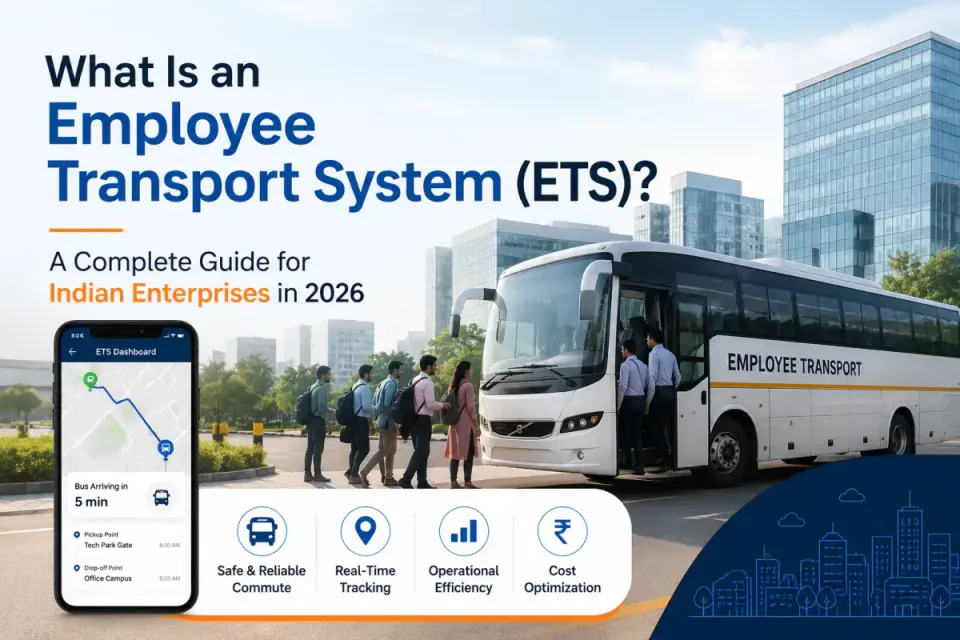
A modern Employee Transport System eliminates the operational silos that create compliance risk. Here is what a compliant transport operation looks like end to end.
Real-Time GPS Tracking
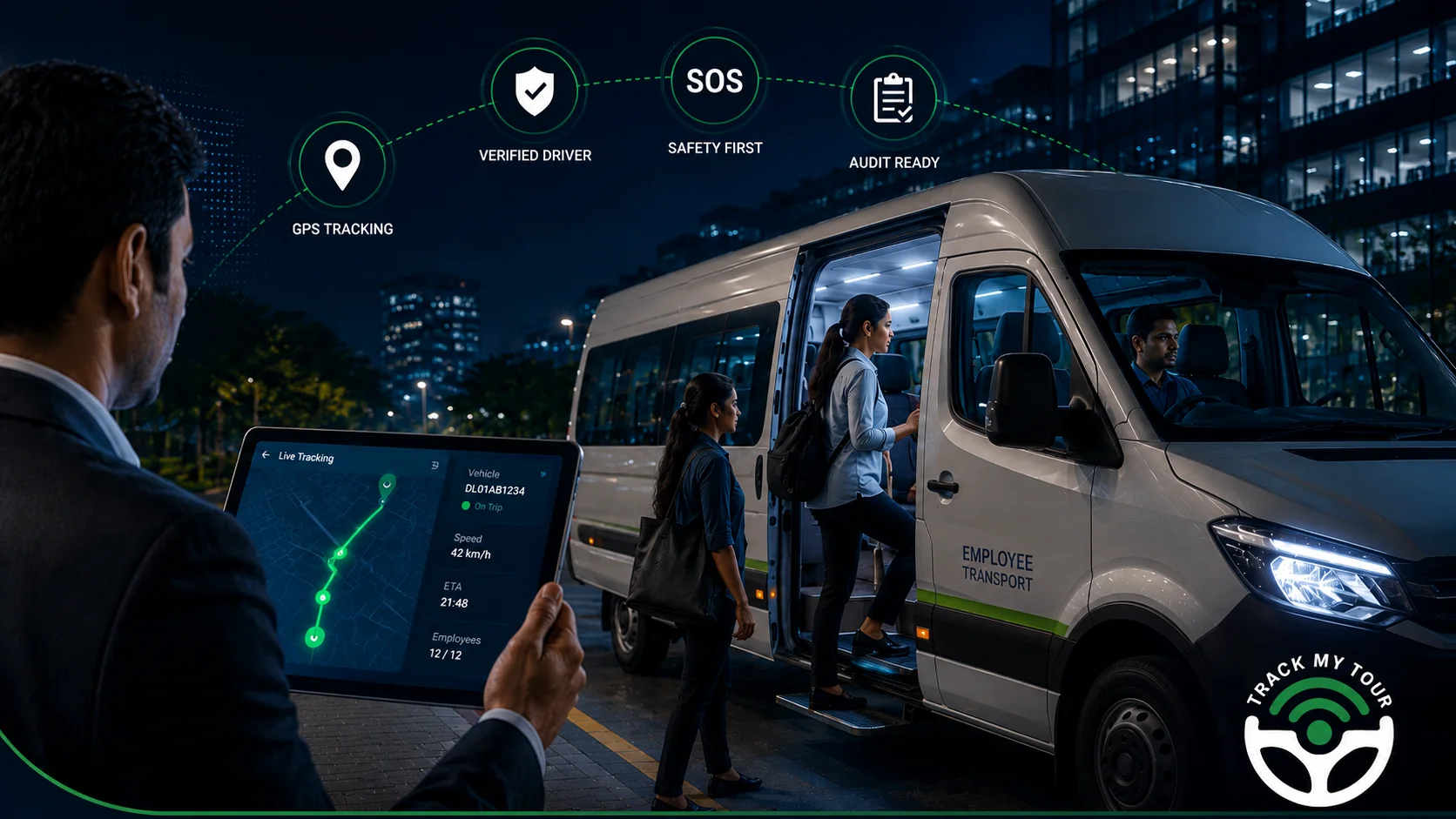
From the moment a vehicle begins a night shift pickup, transport coordinators have live visibility into vehicle location. Not just a dot on a map — but movement history, speed, idle time, and ETA for every stop on the route.
Route Deviation Monitoring
If a vehicle takes an unplanned detour, the system flags it immediately. The deviation is logged, timestamped, and visible in the audit trail. No manual follow-up required. Every deviation creates an evidence record that demonstrates your organization was actively monitoring the trip.
Driver Verification and Credential Management
Driver profiles store background check status, license validity, vehicle insurance, and PUC certificates — all with expiry alerts. A driver whose credentials are out of date cannot be assigned to a trip. This closes one of the most common compliance gaps in vendor-managed transport operations.
Employee Check-In and Trip Confirmation
Employees confirm boarding digitally. Pickup and drop are logged automatically. Transport coordinators know in real time who has been picked up, who is en route, and who has been dropped safely — without relying on driver callbacks or WhatsApp confirmations.
SOS and Incident Response
Employees traveling alone during night shifts have access to an in-app SOS feature. Alerts escalate immediately to transport coordinators and designated safety contacts — creating a timestamped record of the alert, the vehicle location at the time, and the response taken.
Audit-Ready Reporting
Every trip — GPS data, driver details, employee boarding records, route logs — is stored and searchable. Compliance reports can be generated by date range, location, shift type, or employee group in minutes, not days.
How Track My Tour Helps You Meet OSH Rules 2026 Compliance
Track My Tour's Employee Transport Management System is built for the compliance demands that large Indian enterprises, GCCs, BPOs, and IT organizations face today.
- Live GPS Tracking — Every vehicle on your network is tracked in real time. Transport coordinators see location, speed, route progress, and ETA from a single dashboard.
- Route Deviation Alerts — Automated alerts fire the moment a vehicle deviates from an approved route. Every deviation is logged with a timestamp for full audit traceability.
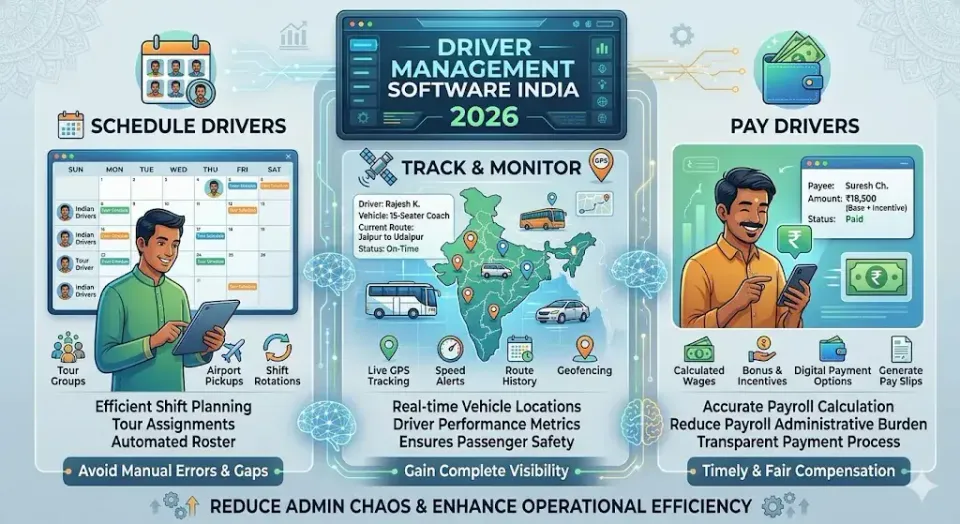
- Driver Profile Management — Maintain a centralized registry of verified drivers with document expiry notifications, background check status, and performance history.
- Digital Trip Logs — Every night shift trip generates a complete record: vehicle assigned, driver on duty, employee list, pickup/drop timestamps, and route data — stored and exportable.
- Employee Safety Features — SOS alerts, lone-rider workflows, and real-time trip status notifications keep employees safe and coordinators informed throughout every journey.
- Compliance Dashboard — Filter, analyze, and export transport data across locations, shifts, and date ranges. When a regulatory query comes in, your compliance team has the answers ready.
- Multi-Location Management — Whether you operate transport across three cities or thirty, Track My Tour's Corporate Transport Management System scales with your workforce.
Track My Tour is used by enterprises managing thousands of daily employee trips across India's top metro cities. The platform is built for organizations where transport compliance is not a checkbox — it is a business-critical operation.
The Business Case Beyond Compliance
Meeting OSH Rules 2026 is the minimum requirement. But organizations that invest in a modern Employee Cab Management Software platform gain advantages that extend well beyond regulatory compliance.
Reduced Operational Cost
Optimized routing, better vehicle utilization, and automated scheduling reduce per-trip costs at scale. Enterprises using route optimization in their workforce transportation software typically reduce vehicle count by 20–30% without reducing coverage.
Stronger Employee Confidence
Employees — particularly women working night shifts — are more likely to accept late-shift assignments when they trust the transport process is safe and monitored. Reduced refusals directly impact shift fill rates and operational continuity.
Vendor Accountability
When your transport vendors know their operations are being tracked and documented, performance improves. Disputes are resolved with data, not debate. Organizations using an ETS typically reduce vendor billing disputes by 60–75% in the first quarter of deployment.
Faster Incident Response
When something goes wrong, organizations with a GPS Employee Transport System in place can respond in real time — not hours later after piecing together manual records from multiple vendors.
Audit-Ready at All Times
Compliance is not a quarterly exercise. With the right system, your organization is audit-ready every day — without additional preparation, manual compilation, or coordinator overtime.
Frequently Asked Questions
What is the OSH Rules 2026 requirement for women employee transport?
The Occupational Safety, Health and Working Conditions (Central) Rules, 2026, require employers to provide safe, GPS-tracked, and documented transportation for women employees working before 6 AM or after 7 PM. Employers must maintain auditable records of all such trips, including driver verification, route data, and pickup/drop logs.
Does the OSH Rules 2026 apply to all employers in India?
The rules apply to establishments covered under the Occupational Safety, Health and Working Conditions Code, 2020. This includes most large organizations in IT, BPO, manufacturing, BFSI, healthcare, and GCCs. Employers should consult their legal counsel for specific applicability based on headcount and sector.
What is an Employee Transport Management System (ETMS)?
An Employee Transport Management System (ETMS) is a software platform that manages and automates corporate employee transportation — including vehicle GPS tracking, route optimization, driver management, trip scheduling, employee boarding, and compliance reporting. It replaces fragmented manual processes with a centralized, auditable system.
What features should an Employee Transport System have for OSH compliance?
A compliant Employee Transport System should include real-time GPS tracking, route deviation alerts, driver background check management, digital trip records, employee check-in/drop confirmation, SOS functionality, and an audit-ready compliance dashboard with exportable reports.
How does Track My Tour support OSH Rules 2026 compliance?
Track My Tour's Employee Transport Management System provides all core compliance capabilities — live GPS tracking, driver verification, route monitoring, digital trip logs, SOS alerts, and a compliance dashboard with export functionality. The platform is designed for large Indian enterprises managing multi-location, multi-shift transport operations.
What happens if an organization is not compliant with OSH Rules 2026 transport requirements?
Non-compliance can expose organizations to regulatory penalties under the OSH Code, reputational damage in the event of a safety incident, and legal liability. The inability to produce auditable transport records is itself a compliance failure under the new framework — regardless of whether an incident occurred.
What is the difference between Employee Transport Software and a GPS vehicle tracker?
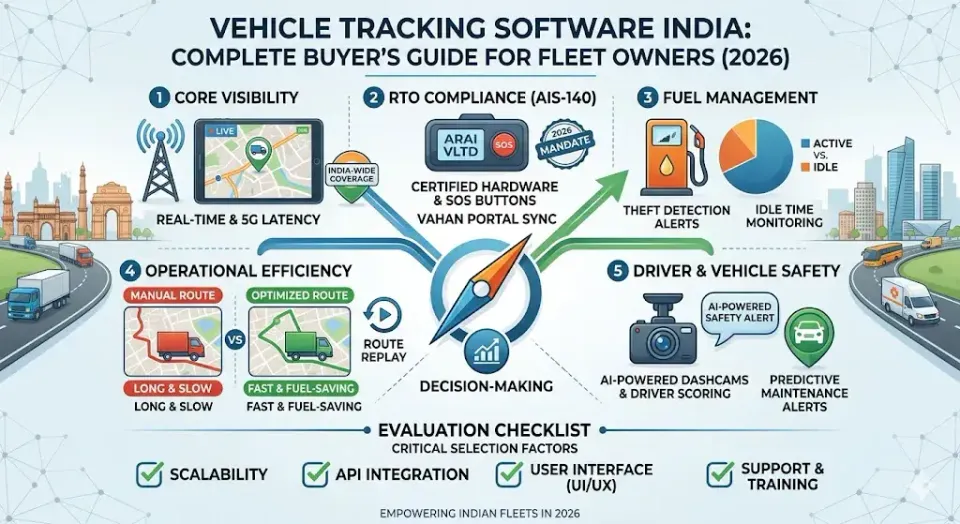
A basic GPS tracker shows vehicle location. Employee Transport Software manages the entire transport operation — scheduling, employee assignment, driver verification, route optimization, boarding confirmation, compliance reporting, and incident management. It is a complete operational and compliance platform, not just a tracking device.
Can Track My Tour handle transport management across multiple cities?
Yes. Track My Tour's Corporate Transport Management System is built for multi-location operations. Enterprises can manage transport fleets, drivers, routes, and compliance data across all locations from a single centralized platform — with location-specific reporting for each site's compliance requirements.
The Compliance Turning Point Has Arrived
For years, employee transportation sat in an operational grey zone — important, but rarely treated as a strategic compliance priority.
The OSH Rules 2026 changed that.
GPS tracking, driver verification, route monitoring, and audit-ready trip records are no longer differentiators. They are the baseline. Organizations that continue to rely on spreadsheets, vendor phone calls, and manual logs are now carrying regulatory and reputational risk that grows every day.
The good news: the technology exists, it is proven at scale across Indian enterprises, and it can be deployed faster than most compliance timelines allow.
The question is no longer whether your organization should invest in an Employee Transport Management System. The question is whether you can afford not to — and how quickly you can close the compliance gap before it becomes a liability.
Track My Tour's Employee Transport System gives enterprises, GCCs, BPOs, and IT organizations the GPS tracking, driver management, compliance reporting, and audit-ready documentation they need to meet OSH Rules 2026 requirements — and run a safer, more efficient transport operation across every city they operate in.
Book a free demo and see how the platform maps to your night shift transport operation — including a realistic view of what compliance looks like for your specific fleet size and shift structure.