India's fleet telematics market is entering a decade of rapid growth. According to recent market research, the market - valued at approximately USD 1.68 billion in 2025 - is projected to reach nearly USD 4 billion by 2032, expanding at a compound annual growth rate (CAGR) of 13.2%.
On paper, this looks like an unambiguous success story. GPS devices are cheaper, connectivity is better, and Indian fleet operators - from logistics companies to tour operators to corporate transport providers - are adopting digital tools faster than ever before.
But growth numbers only tell half the story. The more important question for anyone actually running a fleet is not whether the market is growing. It's whether their business can grow with it - without operational costs and headcount rising in lockstep with every new vehicle added to the road.
That is the real challenge behind the market statistics. This article breaks down what's fueling India's fleet telematics boom, why scaling fleets the old-fashioned way is becoming unsustainable, and what a genuinely scalable fleet operation looks like in practice.
India's Fleet Management Is Undergoing a Quiet Revolution
For most of the last decade, "fleet technology" in India meant one thing: a GPS unit bolted under the dashboard, feeding a dot on a map to a control room somewhere. It told you where a vehicle was. It didn't tell you much else.
That's changing fast. Fleet telematics has moved from being a tracking accessory to a strategic business investment - something boards and operations heads now budget for deliberately, rather than bolt on as an afterthought. The reason is simple: the businesses that depend on vehicles have gotten far more complex.
Consider who is adopting digital fleet solutions today:
- Logistics and last-mile delivery companies, under pressure to move more shipments with tighter delivery windows
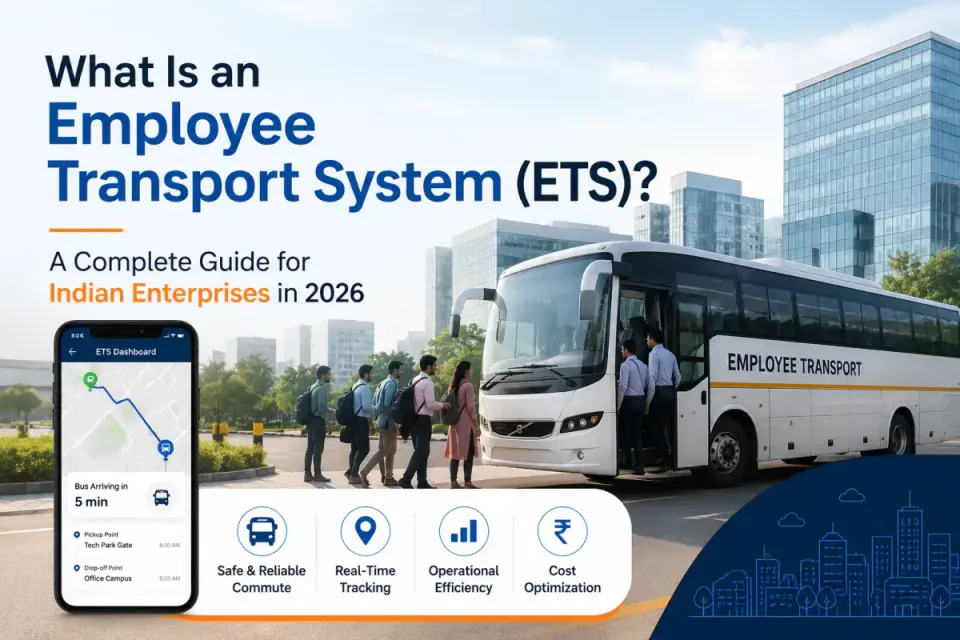
- Employee transport providers, managing thousands of daily shift-based trips across metro cities
- Tour and travel operators, coordinating multi-day itineraries across vendor and owned vehicles
- Corporate mobility teams, running executive and staff transport with strict service-level expectations
- Field service organizations, dispatching technicians and service vehicles across wide territories
Each of these sectors runs on the same underlying asset - vehicles in motion - but each faces its own mix of safety, compliance, and customer-experience pressure. That shared dependency is precisely why fleet telematics has stopped being a niche logistics tool and become infrastructure for a much broader slice of the Indian economy.
The Real Scaling Challenge: More Vehicles, More People, More Cost
Here is the pattern that plays out in almost every growing fleet business in India. A company starts with 15 or 20 vehicles, run by a small, hands-on team. Growth arrives - new contracts, new routes, new cities. And the instinctive response is to grow the team at the same pace as the fleet.
That usually means hiring:
- Dispatchers to assign vehicles and drivers to trips
- Transport coordinators to manage day-to-day scheduling
- Operations executives to oversee routes and resolve exceptions
- Customer support staff to handle calls, complaints, and status updates
- Administrative staff to reconcile billing, documents, and reports
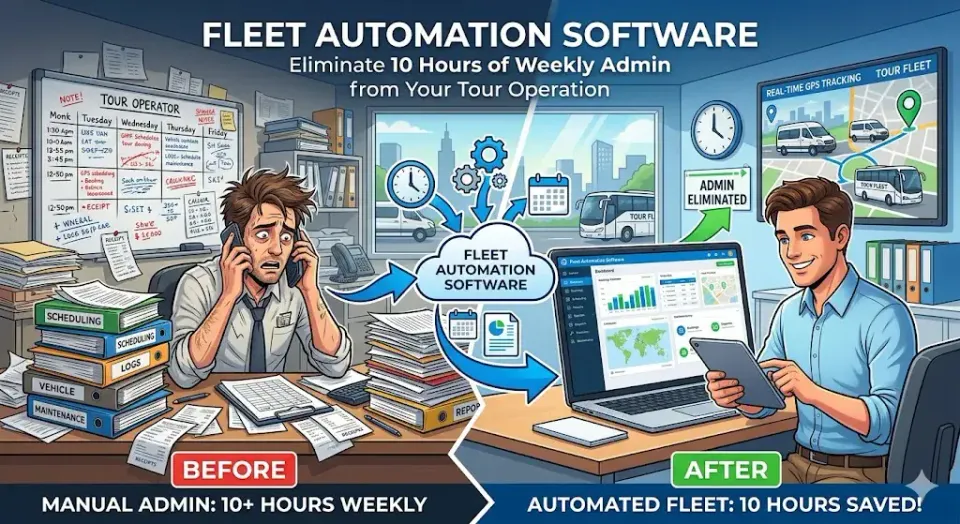
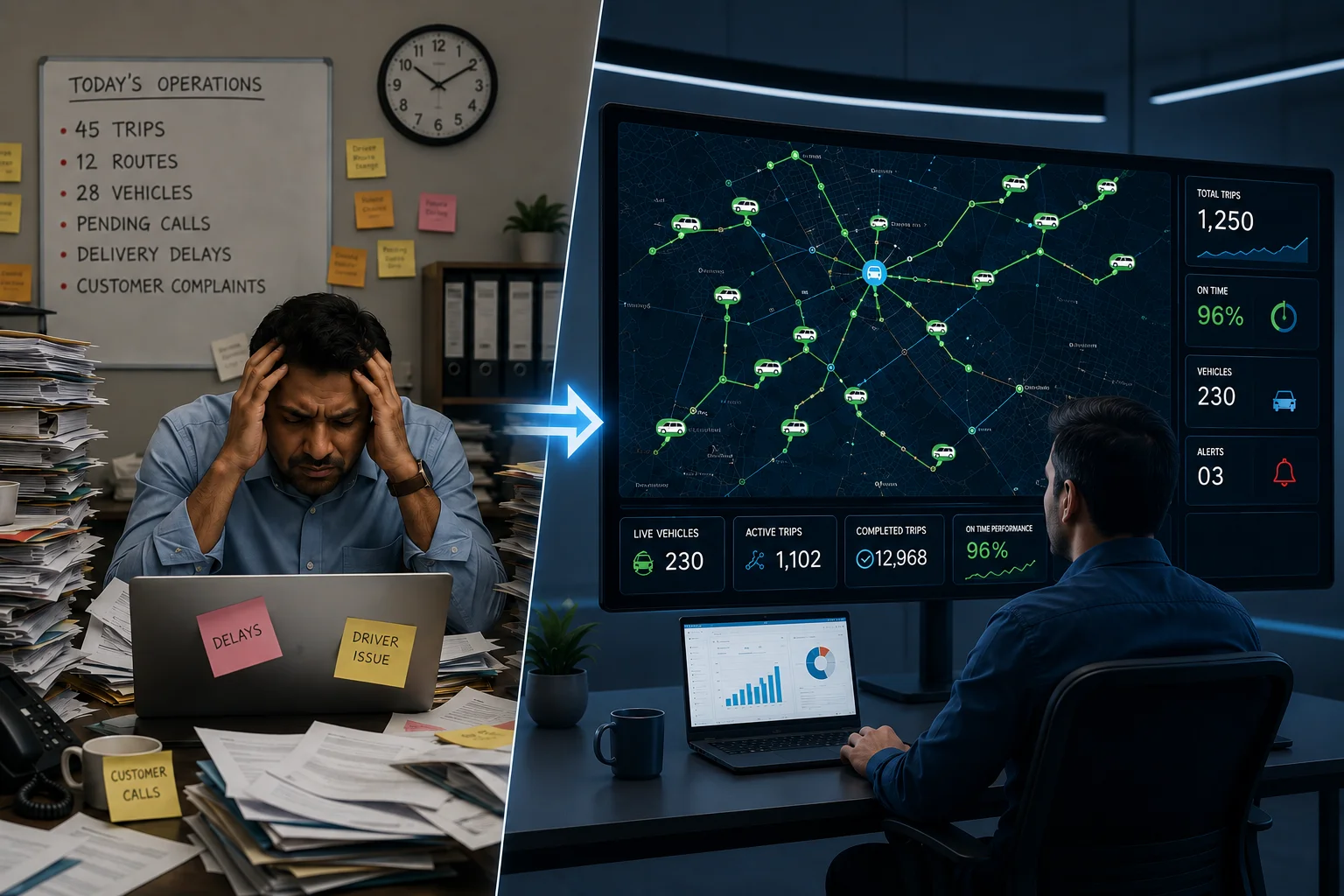
This works - for a while. But it doesn't scale. Every additional 20 vehicles doesn't just add cost proportionally; it adds coordination overhead that grows faster than the fleet itself. More vehicles mean more routes to plan manually, more phone calls to track vehicle status, more spreadsheets to reconcile at month-end, and more chances for something to slip through the cracks.
The hidden cost of manual scaling. A fleet that doubles in size rarely just doubles its coordination workload - it often triples or quadruples it, because the complexity of scheduling, exceptions, and communication compounds rather than adds. Hiring more people to manage that complexity treats the symptom, not the cause.
The businesses that hit a growth ceiling aren't usually the ones that ran out of vehicles or customers. They're the ones that ran out of operational capacity to coordinate what they already had - and discovered too late that adding headcount wasn't a sustainable answer.
Sustainable scaling requires a different lever entirely: technology that absorbs the coordination overhead automatically, so that fleet size and team size stop being tied together.
Why Fleet Businesses Need One Connected Platform, Not Ten Disconnected Tools
A common - and costly - mistake is trying to solve scaling problems by adding more point solutions: a separate app for GPS tracking, a different one for billing, a spreadsheet for driver documents, a WhatsApp group for customer updates. Each tool solves a narrow problem in isolation, but none of them talk to each other. The result is a business that runs on a patchwork of logins, exports, and manual reconciliation.
Modern fleet businesses need the opposite: one connected platform that brings together:
- GPS tracking
- Driver management
- Vehicle management
- Employee Transport System (ETS)
- Route optimisation
- Tour management
- Customer communication
- Billing
- Reporting
- Analytics
- Compliance
When these functions live in one system, automation replaces the manual work of moving information between tools. A trip completed in the field automatically updates the billing record. A document nearing expiry automatically alerts the compliance owner. A route change automatically notifies the customer. None of it requires a person to notice, copy, and re-enter data somewhere else.
This is where the real cost reduction happens - not by cutting corners on service, but by removing the manual coordination work that used to require an extra hire every time the fleet grew.
India's Fleet Telematics Market, By the Numbers
The scale of this shift is reflected clearly in recent market research covering India's fleet telematics platforms segment.
| Metric | Value |
|---|---|
| Market size (2025) | USD 1.68 Billion |
| Projected market size (2032) | Approximately USD 4 Billion |
| CAGR (2025–2032) | 13.2% |
A 13.2% CAGR sustained over seven years is not a marginal trend - it represents a fundamental shift in how Indian businesses view fleet technology. It also means that the fleet operators who adopt integrated platforms early will have a multi-year head start over competitors still relying on spreadsheets and phone calls by the time the market triples in size.
What's Driving This Growth?
Four forces stand out as the primary engines behind India's fleet telematics expansion.
1. Rapid Expansion of Logistics and E-commerce
India's e-commerce and quick-commerce boom has fundamentally changed what "acceptable delivery time" means. Same-day and 10-to-30-minute delivery promises have forced logistics networks to modernize their supply chains from the ground up. Vehicle utilization and delivery efficiency are no longer back-office metrics - they are the product itself, as far as the end customer is concerned. Telematics platforms give logistics operators the real-time routing and vehicle-utilization data needed to meet these expectations without over-provisioning their fleets.
2. Cloud-Based Fleet Platforms
Cloud infrastructure has removed the traditional barriers to adopting fleet software. Operators no longer need to invest in servers or IT teams to run a fleet management system. Cloud-based platforms offer:
- Scalability that grows with the fleet, without new hardware
- Automatic updates, so the platform improves without operator intervention
- Lower infrastructure costs compared to on-premise deployments
- Remote accessibility for teams managing operations across multiple cities
- Stronger data security than most operators could achieve on their own
For a country as geographically distributed as India, cloud accessibility alone has been a major unlock - a fleet manager in Mumbai can now monitor operations in Jaipur or Coimbatore from the same dashboard, in real time.
3. Artificial Intelligence
Artificial intelligence is arguably the most transformative force in this market. AI capabilities now embedded in leading fleet platforms include:
- AI-driven route optimisation that adapts to live traffic and demand patterns
- Predictive maintenance that flags vehicle issues before they cause breakdowns
- Driver behaviour analysis that identifies risky driving patterns early
- Fuel optimisation that reduces one of the largest variable costs in fleet operations
- Predictive analytics that forecast demand and resource needs
- Anomaly detection that flags unusual patterns in routes, costs, or vehicle usage
- Business intelligence that turns raw trip data into operational decisions
What this really represents is a shift from reactive fleet management to proactive decision-making. A reactive fleet operation finds out about a problem when a vehicle breaks down or a customer complains. A proactive, AI-driven operation catches the pattern that leads to the breakdown - days or weeks before it happens.
4. Medium-Sized Fleet Operators
Perhaps the most telling trend is who is adopting telematics fastest. It isn't only the largest enterprise fleets - it's medium-sized operators, typically running somewhere between 20 and 200 vehicles.
These businesses are in a uniquely difficult position: large enough that manual coordination has become genuinely painful, but not large enough to absorb the cost of a full operations team for every function. For this segment, an integrated telematics platform isn't a luxury upgrade - it's often the only realistic way to keep growing without proportionally growing overhead. That is precisely why mid-sized fleets are leading adoption rather than trailing it.
Why GPS Tracking Alone Is No Longer Enough
It's worth being direct about this: knowing where a vehicle is right now is table stakes, not a competitive advantage. Businesses today need considerably more from their fleet technology, including:
- Operational visibility across every vehicle, driver, and trip - not just the ones someone happens to be watching
- Automation that removes manual, repetitive coordination work
- Analytics that turn trip and cost data into decisions, not just historical records
- Compliance tracking that keeps documents, licenses, and permits current without manual follow-up
- Communication tools that keep customers and employees informed automatically
- Workforce management capabilities that extend beyond vehicles to the drivers and staff running them
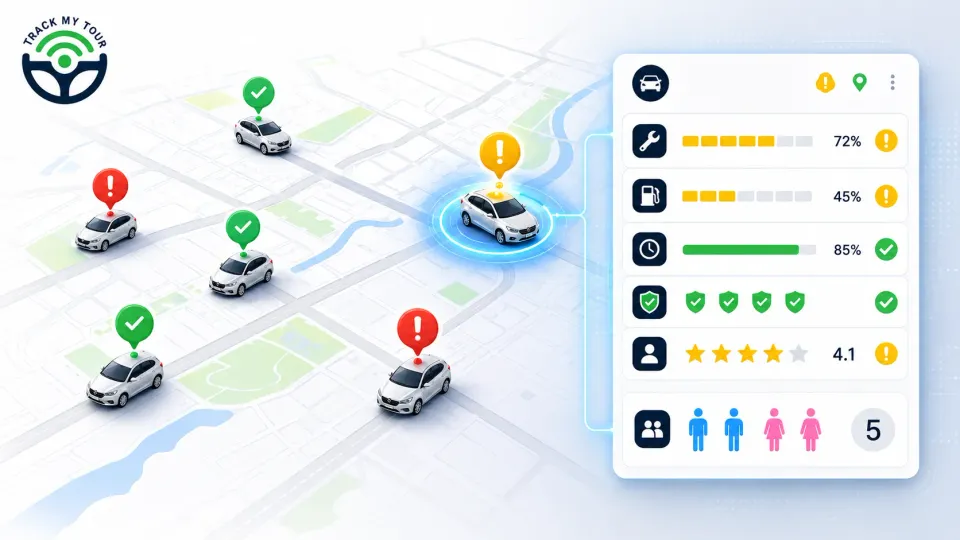
A GPS dot on a map answers one question: "Where is the vehicle?" A modern fleet business needs answers to dozens of other questions - Is this driver's license about to expire? Is this route the most efficient one available? Has this customer been notified of a delay? Is this vehicle due for service? GPS tracking alone answers none of them.
Industry Trends Shaping the Next Decade
Beyond the specific growth drivers, several broader trends are converging to reshape fleet management in India over the next several years:
- Digital transformation - fleet operations moving off paper and spreadsheets entirely, not partially
- Cloud computing - becoming the default deployment model rather than the exception
- Artificial intelligence - moving from a premium add-on to a standard expectation in fleet software
- Connected fleets - vehicles, drivers, and back-office systems operating as one continuous data loop
- Automation - replacing manual, repetitive administrative tasks across scheduling, billing, and reporting
- Predictive analytics - shifting fleet decisions from "what happened" to "what's about to happen"
- Operational intelligence - giving fleet leaders a single, real-time view of performance instead of fragmented reports
Taken together, these trends point in one direction: fleet management is becoming a data and software discipline, not just a vehicle-and-driver logistics function.
Why This Matters: Efficiency Will Beat Fleet Size
Here is the shift that deserves the most attention from fleet operators: the future leaders of this market will not necessarily be the businesses with the largest fleets. They will be the businesses running the most efficient fleets, powered by intelligent technology.
Scale is no longer the moat. A 40-vehicle operator running an integrated, AI-assisted platform can out-execute a 100-vehicle operator running on spreadsheets and phone calls - lower cost per trip, faster response times, and a leaner team doing more with better information.
This is a meaningful change in competitive dynamics. For decades, fleet size was a reasonable proxy for market power - more vehicles meant more capacity, more contracts, more revenue. That relationship is weakening. A well-run, technology-enabled fleet of a given size can now out-compete a larger, poorly coordinated one on cost, reliability, and customer experience - the metrics that actually determine who wins the contract.
What This Means for Track My Tour
This market shift is exactly the problem Track My Tour was built to address: helping Indian fleet, tour, and transport businesses scale operations without scaling administrative overhead at the same rate.
Rather than treating tracking, billing, driver management, and reporting as separate concerns, Track My Tour brings them into a single operational platform:
| Capability | What It Replaces or Reduces |
|---|---|
| GPS Tracking | Manual driver check-in calls and location guesswork |
| Employee Transport System | Spreadsheet-based shift scheduling and WhatsApp coordination |
| Tour Management | Manual itinerary tracking across multi-day, multi-vehicle trips |
| Driver Management | Paper-based document files and missed license renewals |
| Route Optimisation | Manually planned routes that waste fuel and driver time |
| AI Analytics | Delayed, backward-looking reports that arrive too late to act on |
| Automated Reporting | Hours spent compiling data manually for management review |
| Cloud Platform | On-premise servers and location-locked access |
| Fleet Dashboard | Fragmented views scattered across multiple tools and logins |
| Operational Intelligence | Gut-feel decisions made without real operating data |
| Billing | Manual invoice generation and reconciliation errors |
| Real-time Monitoring | Reactive firefighting after a problem has already occurred |
| Notifications | Customer and employee updates sent manually, if at all |
The practical effect is straightforward: work that used to require a dedicated coordinator, or an extra pair of hands at the admin desk, now happens automatically inside the platform. A fleet operator adding 20 more vehicles doesn't need to plan for 3 more hires just to keep the wheels turning - the system absorbs the additional coordination load.
This isn't about replacing people. It's about freeing the people already on the team from repetitive coordination work, so they can focus on the decisions that actually need human judgment - customer relationships, vendor negotiations, and strategic growth.
Future Outlook: The Shape of Fleet Businesses in 2032
If the market grows as projected - from USD 1.68 billion to nearly USD 4 billion by 2032 - the fleet businesses that come out ahead will likely share a common profile:
- Connected fleets, where every vehicle feeds live data into a single operational system
- AI-first operations, where routing, maintenance, and risk decisions are informed by predictive models, not instinct alone
- Cloud platforms, accessed from anywhere, updated continuously, with no infrastructure burden on the operator
- Automation embedded into scheduling, billing, and compliance, not layered on as an afterthought
- Data-driven decision making, where every major operational choice is backed by real trip and cost data
- Scalable fleet businesses, where adding vehicles no longer means adding a proportional headcount
Fleet operators who build toward this profile now will be far better positioned than those who wait for the market to force their hand.
Conclusion: Building Intelligent, Scalable Fleet Operations
India's fleet telematics market crossing USD 4 billion by 2032 is a meaningful milestone, but the number itself isn't the real story. The real story is what separates the fleet operators who thrive in that market from the ones who get squeezed out of it.
The operators who struggle will be the ones who keep answering growth with more hiring - more dispatchers, more coordinators, more administrative staff - until costs rise faster than revenue and margins quietly disappear.
The operators who thrive will be the ones who recognize that scaling isn't a headcount problem. It's a technology problem. They will invest in integrated platforms that absorb operational complexity instead of requiring more people to manage it.
The future of fleet management is not simply about tracking more vehicles - it is about building intelligent, scalable operations that grow efficiently and profitably.
Frequently Asked Questions
What is the size of India's fleet telematics market in 2025 and its projected value by 2032?
India's fleet telematics platforms market was valued at approximately USD 1.68 billion in 2025 and is projected to reach around USD 4 billion by 2032, growing at a CAGR of 13.2%.
What is driving growth in India's fleet telematics market?
Four factors are driving growth: the rapid expansion of logistics and e-commerce, the shift to cloud-based fleet platforms, wider adoption of artificial intelligence for route optimisation and predictive maintenance, and medium-sized fleet operators adopting telematics faster than large enterprises.
Why is GPS tracking alone no longer enough for fleet operators?
Modern fleet operations need more than a location dot on a map. Businesses now require operational visibility, automation, analytics, compliance documentation, customer communication, and workforce management - capabilities that go well beyond what basic GPS tracking provides.
How can fleet operators scale without increasing operational costs proportionally?
Sustainable scaling comes from technology, not headcount. Instead of hiring more dispatchers, coordinators, and support staff as the fleet grows, operators use an integrated fleet platform to automate scheduling, route planning, billing, and reporting - so the team stays lean even as vehicle count rises.
What is an integrated fleet management platform?
An integrated fleet management platform brings together GPS tracking, driver management, vehicle management, route optimisation, tour management, customer communication, billing, reporting, analytics, and compliance in a single connected system, instead of requiring separate tools that don't share data.
How does AI improve fleet management?
AI enables route optimisation, predictive maintenance, driver behaviour analysis, fuel optimisation, predictive analytics, anomaly detection, and business intelligence. It shifts fleet management from reactive problem-solving to proactive decision-making, catching issues before they become breakdowns or missed deliveries.
Why are medium-sized fleet operators leading telematics adoption in India?
Medium-sized fleets (roughly 20–200 vehicles) are large enough to feel the operational pain of manual, spreadsheet-driven processes, but lean enough that hiring more staff to manage growth isn't sustainable. Cloud-based telematics gives them enterprise-grade visibility without enterprise-grade overhead.
What features should a modern fleet platform include?
A modern fleet platform should include GPS tracking, driver and vehicle management, route optimisation, tour management, an employee transport system where applicable, automated billing, real-time monitoring and notifications, reporting, AI-based analytics, and compliance tracking - all within one dashboard.
How does Track My Tour help fleet businesses scale efficiently?
Track My Tour combines GPS tracking, driver and vehicle management, employee transport, tour management, route optimisation, AI analytics, automated billing, and real-time notifications in one cloud platform - reducing the administrative workload that would otherwise require additional staff as a fleet grows.
Is cloud-based fleet management better than on-premise systems for Indian operators?
For most Indian fleet and tour operators, yes. Cloud platforms offer easier scalability, automatic updates, lower upfront infrastructure costs, remote accessibility for distributed teams, and strong data security - without the capital expense and maintenance burden of on-premise software.
See How Track My Tour Helps You Scale Without the Overhead
If your fleet is growing faster than your team can comfortably manage, the answer isn't necessarily more hires - it's a platform built to absorb that growth. See how Track My Tour brings GPS tracking, driver and vehicle management, route optimisation, billing, and analytics into one connected system built for Indian fleet, tour, and transport operators.
Book a free demo and see what scaling without proportional cost increases could look like for your fleet.