GPS tracking is now standard for any fleet-based business in India — yet most operators have only a surface-level understanding of how it actually works. That gap matters. It affects which tracking solution you choose, how you troubleshoot accuracy issues, and what expectations you set with your team and your customers.
This guide explains GPS tracking in plain English, covers how it applies specifically to tour fleet operations, and outlines the real benefits you can expect once it's running across your vehicles.
How GPS Works: The Basics
GPS stands for Global Positioning System — a network of 31 satellites orbiting Earth at roughly 20,000 km altitude, operated by the US government and freely available to any GPS receiver. Your smartphone, your car's navigation system, and fleet tracking devices all use the same satellite network.
Here's exactly how a location fix is calculated:
- Your GPS device listens for signals from multiple satellites simultaneously
- Each satellite broadcasts its exact location and the precise time the signal was sent
- The device calculates how long each signal took to arrive — which gives the distance to each satellite
- With signals from at least 4 satellites, the device pinpoints its latitude, longitude, and altitude using trilateration
A modern smartphone GPS achieves accuracy of 3–5 metres in open sky. Accuracy degrades in dense urban areas, inside buildings, or underground — which is why the driver's phone should be placed on the dashboard, not tucked in a bag or pocket.
Quick Answer: GPS tracking works by measuring the time it takes for signals from multiple satellites to reach a GPS receiver. The device uses those signal delays to calculate its exact position. That position is then sent over mobile data to a cloud server, where your operations team can see it live on a map.
GPS vs. Real-Time Tracking: What's the Difference?
GPS tells you where the device is. Real-time tracking is the infrastructure that sends that location data to a central server so your operations team can see every vehicle live on a map.
The data flow works like this:
- The driver's app records GPS coordinates at regular intervals (typically every 10–30 seconds)
- Coordinates are transmitted to the cloud server over the phone's 4G mobile data connection
- The server processes the data and pushes updates to your dashboard
- Your operations team sees a live map with all vehicle positions updating in near real-time
The mobile data connection is the variable that most affects perceived accuracy. In areas with poor coverage — remote hill stations, mountain highways — location updates may lag by 30–60 seconds. The trip record is never lost; only the live refresh rate is affected.
Hardware Trackers vs. App-Based Tracking: Which Is Right for You?
Dedicated Hardware Trackers
SIM-card-enabled devices hardwired into the vehicle's OBD port or power supply. They track the vehicle independently of driver action and keep working even if the driver's phone is off. Hardware trackers are ideal for high-value assets where continuous tracking is mandatory regardless of driver behaviour — or for companies that own vehicles and lease them to drivers who use personal phones. Hardware cost in India typically runs ₹3,000–₹8,000 per vehicle, plus installation.
App-Based Tracking
GPS tracking runs on the driver's existing Android or iOS smartphone. Setup is instant: install the app, grant location permissions, and tracking begins. No hardware installation, no per-vehicle upfront cost. App-based tracking is the practical choice for tour and travel fleets where drivers already carry smartphones and tracking is tied to specific duty windows.
For most Indian tour operators: App-based tracking using the driver's smartphone is the smart starting point. It deploys to the entire fleet in a single day with zero hardware investment. Add dedicated hardware trackers only for high-value vehicles or when you need to track vehicles independently of driver compliance.
What GPS Data Actually Enables for Tour Operators
Raw GPS coordinates become operationally valuable when paired with the right fleet software. Here's what becomes possible:
Live Fleet Map
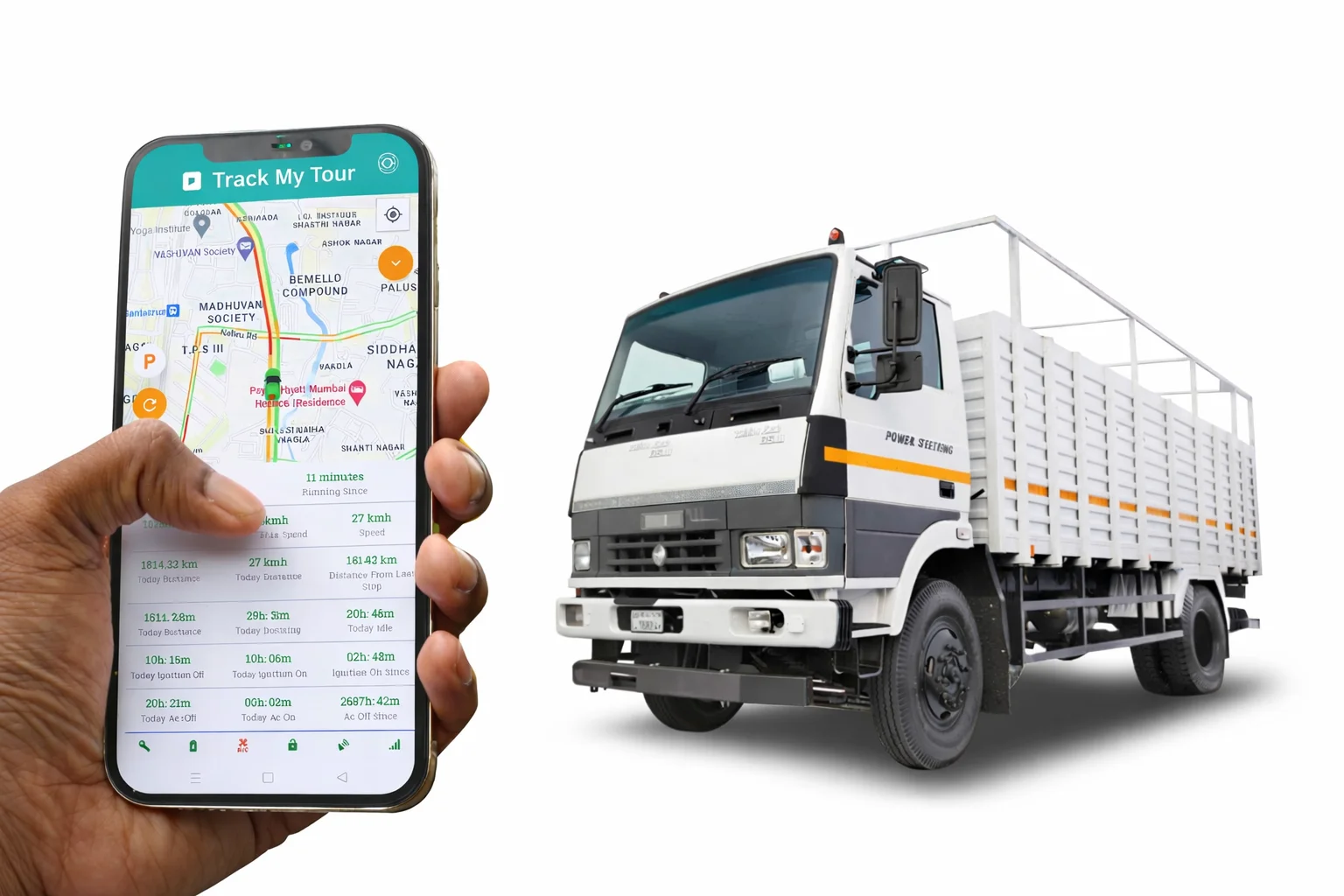
All active vehicles on a single map with colour-coded status indicators — en route, at pickup, delayed, idle. Operations coordinators monitor the full fleet without making a single phone call. For a 30-vehicle operation, this alone saves 2–3 hours of coordinator time daily.
Trip History & Playback
Every trip's exact route is stored and replayable. Resolve route disputes, verify mileage claims, and generate accurate duty slips from actual trip data — not driver estimates. GPS trip history is especially valuable when a customer disputes the route taken or distance charged.
Geofencing & Alerts
Define virtual boundaries around pickup zones, hotels, or restricted areas. Receive automatic alerts when a vehicle enters or exits — useful for passenger arrival notifications and depot security monitoring. A simple airport geofence can eliminate 80% of "has the driver arrived?" calls.
Mileage Verification for Fuel Audit
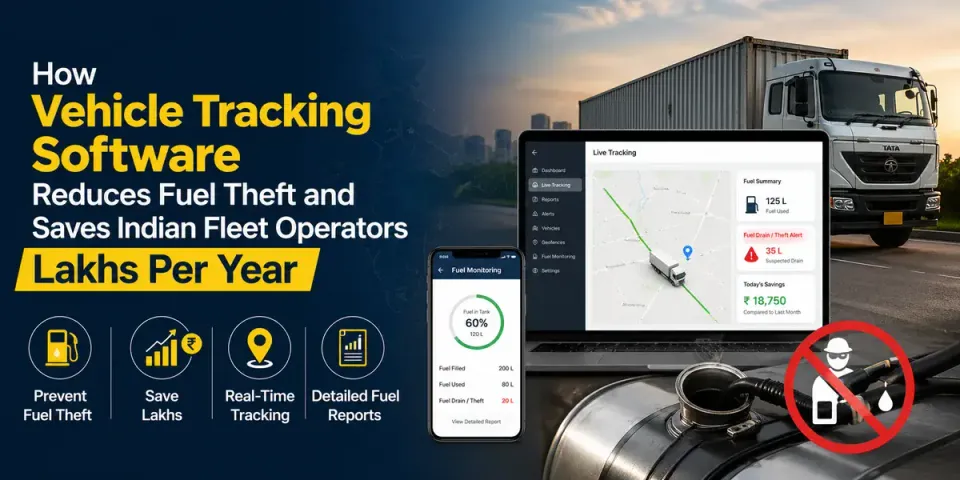
GPS-recorded distances cross-referenced against fuel fill-up claims instantly flag discrepancies. This is one of the highest-ROI features in fleet management because it directly addresses fuel leakage at scale. See: How Vehicle Tracking Software Saves Indian Fleets Lakhs Per Year.
Live ETA Sharing with Passengers
Share a live tracking link with passengers so they can see the vehicle location and estimated arrival time — without calling the driver or your office. Operators who deploy this feature report a 60–70% drop in inbound "where is my cab?" support calls.
Accuracy, Limitations & What to Tell Your Team
GPS is highly accurate — but not perfect. Setting honest expectations with your team prevents frustration when edge cases occur:
- Urban canyons: In areas with tall buildings, GPS signals bounce off structures and may show the vehicle jumping between nearby streets
- Tunnels and underground: GPS signal is lost; the last known position is held until signal is regained
- Aggressive battery saving modes: Drivers who enable battery saver on their phones may interrupt GPS reporting intervals — brief them during onboarding
- Rural and hill station coverage: Sparse 4G in remote areas will delay location updates but will not lose the trip record
Frequently Asked Questions
How accurate is GPS tracking for vehicles in India?
Modern smartphone GPS achieves 3–5 metre accuracy in open areas. In dense urban environments with tall buildings, accuracy can drop to 10–20 metres due to signal reflection. For fleet management purposes — monitoring routes, verifying mileage, and sharing live ETAs — this accuracy level is more than sufficient. Hardware GPS trackers offer slightly better consistency in urban areas compared to phone-based tracking.
Does GPS tracking work in remote areas and hill stations in India?
GPS satellite reception works everywhere in India — including remote hill stations, Ladakh, and Northeast India — because it relies on satellites, not ground infrastructure. However, real-time location updates require a 4G/mobile data connection to reach your dashboard. In areas with poor mobile coverage, live updates may lag by 30–60 seconds, but the full trip record is stored on the device and synced when connectivity returns.
What is the difference between GPS and real-time vehicle tracking?
GPS is the technology that determines the vehicle's location using satellite signals. Real-time tracking is the system that transmits that location over mobile data to a cloud server, where your operations team can view it live. GPS without real-time transmission is passive logging — useful for post-trip reports but not for live fleet monitoring. Real-time tracking combines both technologies.
Is app-based GPS tracking reliable compared to dedicated hardware trackers?
For tour and travel fleet operations, app-based GPS tracking is reliable and practical. It uses the same satellite network as hardware trackers and achieves comparable accuracy. The main difference: hardware trackers work even when the driver's phone is off or battery dies. For most tour operators, app-based tracking is sufficient and far easier to deploy — no installation, no hardware cost, fleet-wide in one day.
How does GPS tracking help reduce fuel costs?
GPS tracking reduces fuel costs in three direct ways: (1) it records actual trip distances, allowing you to cross-reference driver fuel claims and catch false reporting; (2) it tracks idle time, so you can identify and reduce engine-on waiting; (3) it flags route deviations, preventing unofficial detours that add kilometres. Operators using GPS-verified fuel monitoring typically see 10–18% reduction in reported fuel consumption within the first month. See: How Vehicle Tracking Software Saves Indian Fleets Lakhs Per Year.
Further Reading
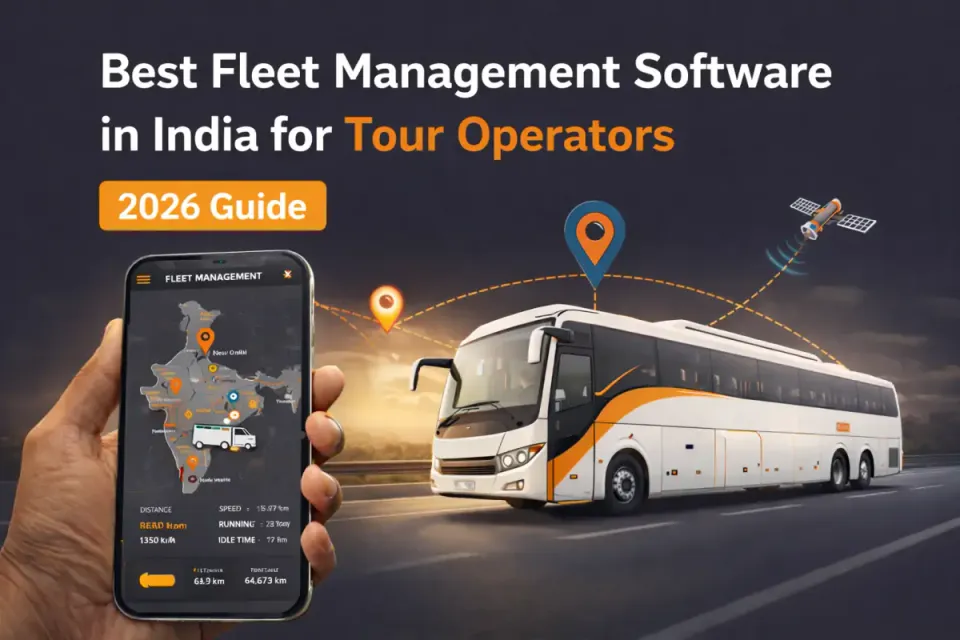
- Best Fleet Management Software in India for Tour Operators (2026)
- How Vehicle Tracking Software Saves Indian Fleets Lakhs Per Year
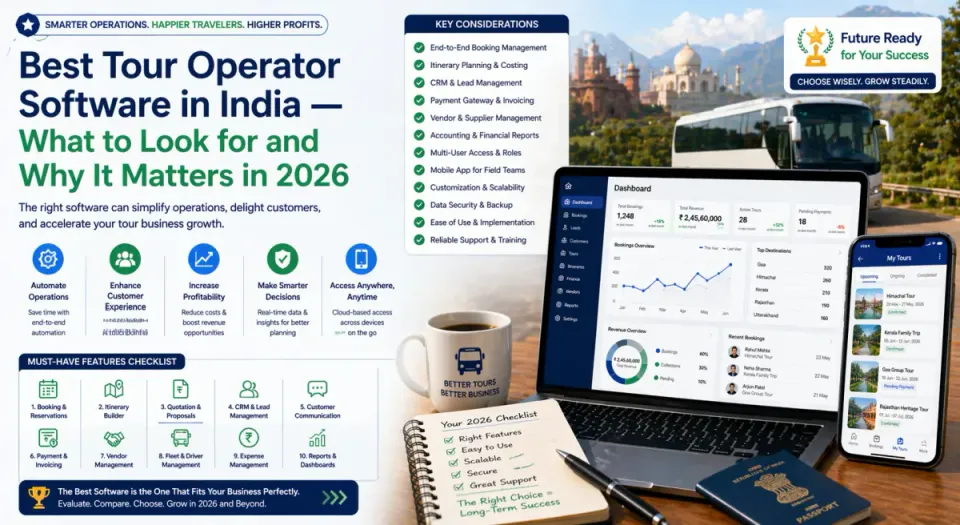
- Best Tour Operator Software in India (2026)
Getting GPS Tracking Running in Your Fleet
For a tour operator using app-based tracking, setup has three steps: install the driver app on each driver's phone, brief drivers on keeping location permissions enabled during duty hours, and verify that your operations dashboard shows all vehicles correctly. Most fleets are fully live within one business day.
Track My Tour's GPS tracking is built into the driver app — no separate hardware, no additional subscriptions. Book a demo to see how it works with your team's existing devices.