Over the past few months, companies like TCS, Infosys, Wipro, Amazon, and Microsoft have tightened their return-to-office (RTO) policies. Some require employees to spend more days in the office, while others are increasingly linking attendance to performance and career progression.
Most discussions stop there.
But for HR, Facilities, and Employee Transport teams, the biggest challenge isn't simply that more employees are returning to the office.
It's that every day looks different.
Hybrid Work Didn't Reduce Complexity. It Multiplied It.
Before hybrid work, transport planning was relatively predictable.
Most employees came to the office every weekday. Routes remained stable, fleet requirements were known in advance, and transport teams could optimize operations over time.
Hybrid work changed that completely.
Today, one project team may work from the office on Mondays and Wednesdays, another on Tuesdays and Thursdays, while employees frequently change their office days based on meetings, project deadlines, customer visits, or manager approvals.
The result is a workplace where attendance constantly shifts — not only in numbers, but in people.
On Monday, 3,000 employees may report to the office. On Tuesday, it may be 2,200. By Wednesday, attendance could exceed 4,000 — but with an entirely different set of employees travelling from different neighborhoods.
For transport teams, yesterday's plan is rarely useful today.
The Real Pain Point: Different People, Different Routes, Every Day
This is where hybrid attendance creates an operational challenge that many organizations underestimate.
Transport planning is no longer about moving a fixed workforce. It's about rebuilding the transport network every single day.
That means:
- Different pickup locations every morning
- Different passenger combinations every day
- Constant route recalculation
- Daily fluctuations in vehicle demand
- Last-minute changes in employee schedules
- Vendor allocations that change with little notice
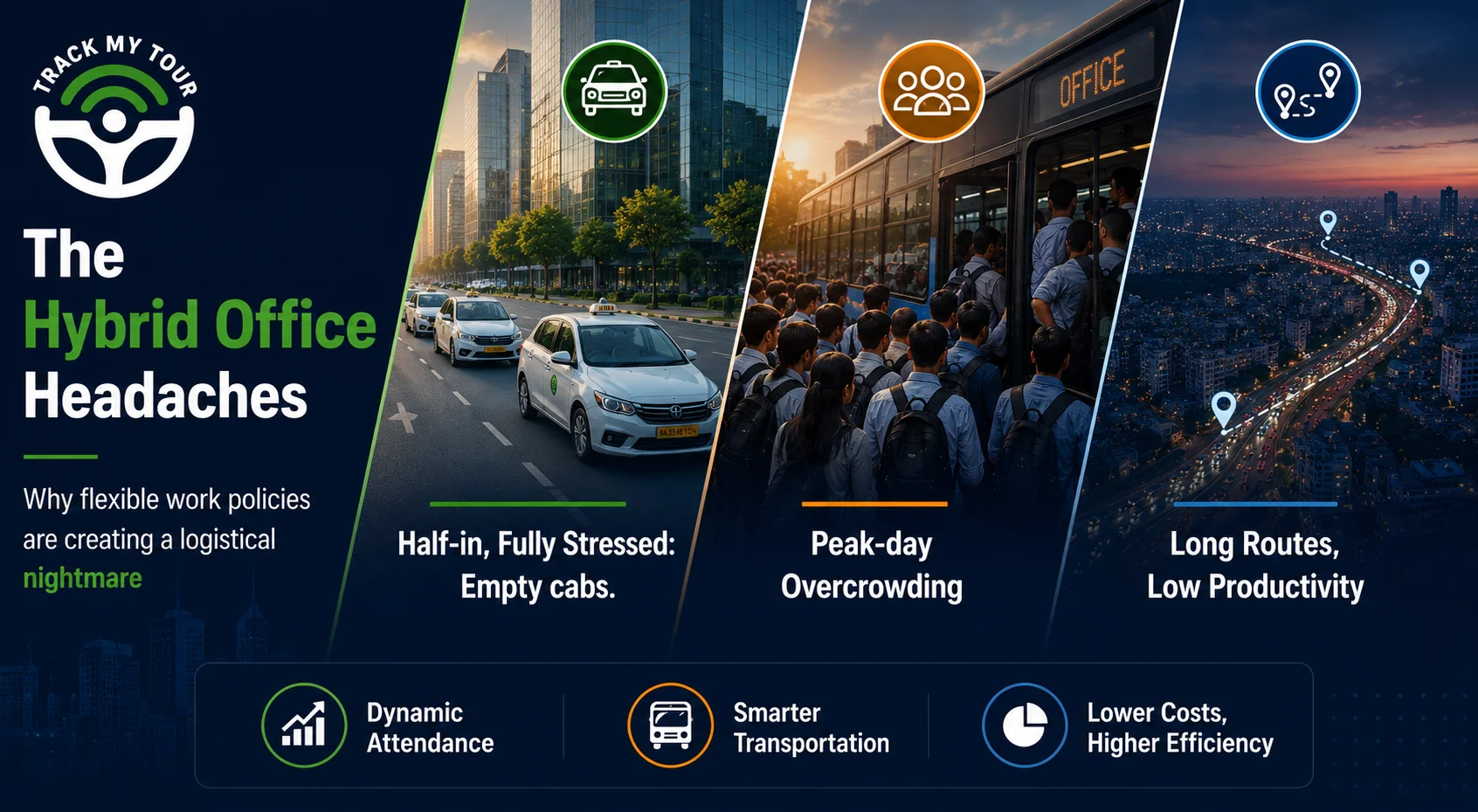
- Empty seats on some routes while other routes run at capacity
Even when total office attendance remains similar, the transport requirement rarely does.
The complexity comes from who is travelling — not just how many.
Why Manual Planning Starts to Break Down
Many organizations still rely on spreadsheets, emails, phone calls, and WhatsApp groups to coordinate employee transport.
These methods work reasonably well when demand is predictable. They struggle when demand changes every day.
Transport coordinators often spend hours manually updating employee lists, redesigning routes, coordinating vendors, adjusting vehicle allocations, and communicating changes before the first employee even begins their commute.
Instead of improving operations, teams spend their time recreating yesterday's work.
As hybrid attendance continues to evolve, that manual effort only grows.
Return-to-Office Doesn't Eliminate the Problem
Some organizations are gradually increasing office attendance, but that doesn't automatically make transport planning easier.
Unless every employee follows the same office schedule, transport demand remains dynamic.
Whether employees attend three days a week, four days a week, or five, transport teams still need to answer the same question every evening:
Who is actually coming tomorrow?
Only after answering that question can they determine:
- How many vehicles are required?
- Which routes should operate?
- Where should pickups take place?
- Which vendors need additional capacity?
- Is vehicle utilization optimized?
- How will employee safety and compliance be maintained?
The planning cycle effectively restarts every day.
What Modern Employee Transport Operations Need
Managing hybrid attendance requires more than additional vehicles. It requires systems that can adapt to changing demand automatically.
Modern Employee Transport Systems are increasingly expected to:
- Capture daily employee attendance or transport requests
- Automatically optimize routes based on that day's passengers
- Dynamically allocate vehicles and transport vendors
- Provide employees with real-time trip confirmations
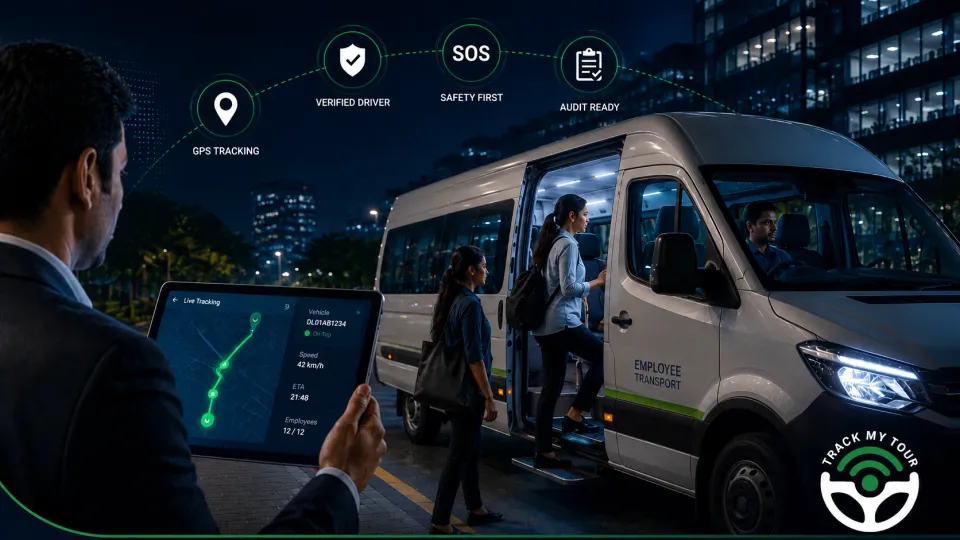
- Maintain GPS tracking, SOS capabilities, and compliance across every trip
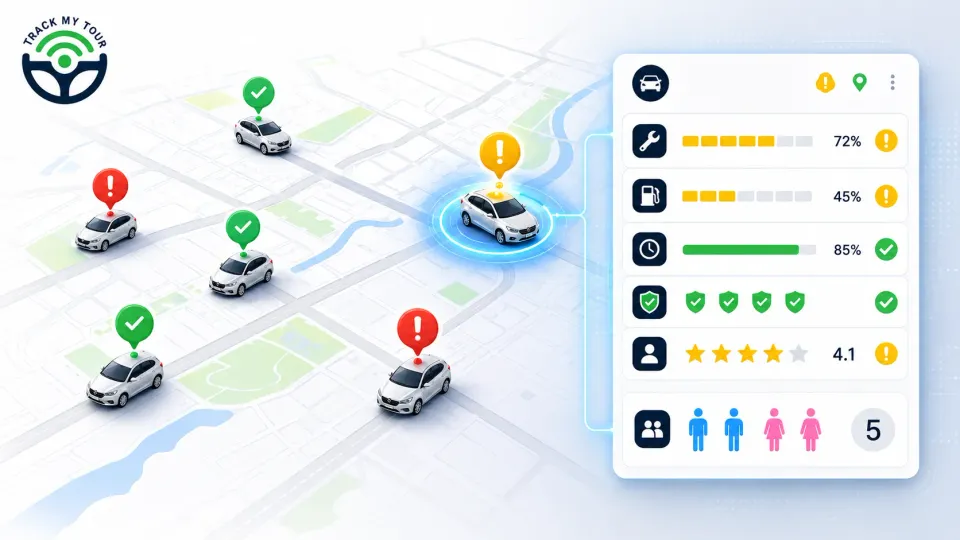
- Give transport and facilities leaders live visibility into utilization, costs, and service performance
The objective isn't simply automation. It's operational agility.
The Bigger Question for Enterprise Leaders
The conversation around Return-to-Office often focuses on office occupancy.
Perhaps the more important conversation is operational readiness.
Can your transport operation adapt when your workforce changes every day? Can it plan efficiently without someone manually rebuilding schedules each evening? Can it maintain employee experience, safety, and cost efficiency while attendance patterns continue to evolve?
For many enterprises, the challenge isn't bringing employees back to the office. It's moving a different workforce to the office every single day.
As hybrid work matures, organizations that succeed won't necessarily have the largest fleets. They'll have transport operations that can respond intelligently to changing demand — without adding complexity for the teams managing them.
Tell Us: What's Your Bigger Operational Challenge?
We'd love to hear from HR, Facilities, Workplace Experience, and Employee Transport professionals:
What has been the bigger operational challenge in your organization?
- Managing higher office attendance?
- Managing constantly changing attendance patterns under hybrid work?
- Or balancing both at the same time?
The conversation around Return-to-Office is no longer just about workplace policies. It's about operational resilience. Organizations that can adapt their employee transport operations to changing attendance patterns will be better positioned to improve employee experience, optimize costs, and maintain safe, reliable commuting — regardless of how workplace policies evolve.
Track My Tour's Employee Transport Management System helps enterprises rebuild routes and vehicle allocations automatically as daily attendance changes — so your transport team plans for tomorrow in minutes, not hours.
Book a free demo and see how your transport operation can adapt to hybrid attendance without adding complexity for your team.